Wondering whether a duplex, triplex, or small apartment property in Delray Beach is worth a closer look? You are not alone. Many investors are drawn to Delray Beach for its coastal location, long-term demand, and redevelopment potential, but small multi-family deals here require careful underwriting and a clear understanding of local rules. In this guide, you will learn what small multi-family investing looks like in Delray Beach, where the biggest opportunities and risks tend to show up, and how to evaluate a property with more confidence. Let’s dive in.
Why Delray Beach Gets Investor Attention
Delray Beach offers a mix that appeals to many small multi-family buyers: a meaningful renter base, a growing population, and a city fabric that supports infill and redevelopment. Recent Census data show a 2024 population of 70,140, with 42,298 total housing units and 34,476 households. The owner-occupied rate was 63.2%, and the median gross rent was $1,914.
That matters because it suggests Delray Beach is not purely an owner-occupied market and not overwhelmingly renter-dominated either. For investors, that can create room for stable rental demand without relying on a single market story. It also means your property-level analysis matters more than broad assumptions.
Population growth adds another reason investors keep watching the market. Delray Beach’s population rose 4.9% from 2020 to 2024. That kind of growth can support long-term housing demand, especially when paired with limited infill opportunities in built-out coastal areas.
What “Small Multi-Family” Means Here
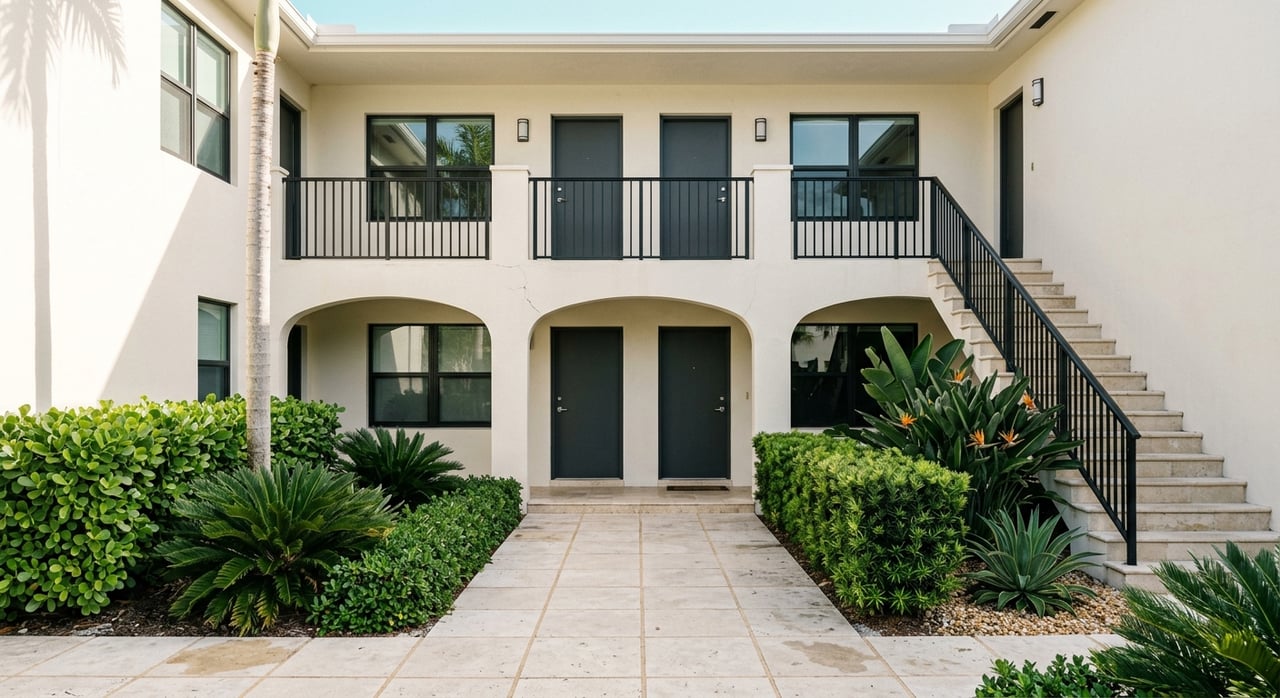
In practical terms, small multi-family in Delray Beach usually means properties like duplexes and smaller apartment-style buildings. The city’s zoning code specifically recognizes duplexes and multifamily uses within its residential standards framework. That is important because these are not treated as unusual property types under the local code.
For you as a buyer, that creates a useful starting point, but it does not mean every parcel can support every plan. The zoning district, the current legal use, and the scope of your renovation or conversion all still matter. A two-unit property with a light cosmetic update is very different from a building expansion or unit-count change.
Why Approvals Matter More Than Many Buyers Expect
One of the biggest mistakes in small multi-family investing is assuming a modest project will stay simple from an approvals standpoint. In Delray Beach, the Current Planning process can become relevant even for relatively small properties.
The city states that Level 2 Site Plan review applies to new construction, additions, or conversions involving no more than a total of five dwelling units for multifamily residential development. Level 3 applies above that threshold. If your strategy includes adding units, changing a use, or materially expanding a structure, review timelines and costs can affect your returns.
That does not mean every property is a heavy entitlement play. It means you should match your business plan to the local process early. Before you assume a value-add path is straightforward, confirm what the city may require.
Historic district rules can change the numbers
If a property sits within a designated historic district, exterior improvements and demolition generally require a Certificate of Appropriateness review. For older duplexes and smaller apartment buildings, that can shape your renovation schedule, construction budget, and design flexibility.
This is especially relevant in a market where some of the most interesting older properties may also come with extra review layers. A charming building may offer upside, but that upside should be weighed against timing and compliance requirements.
One permit rule changed, but not everything
Delray Beach no longer requires landlord permit renewals, effective October 1, 2023. That removes one local administrative step for rental owners. Still, it does not eliminate building, zoning, flood, or historic review requirements where those apply.
In other words, simpler does not mean simple. You still want to review the full local compliance picture before closing.
How to Underwrite Delray Beach More Carefully
Citywide numbers are helpful, but they should not drive your entire investment decision. Delray Beach’s recent market signals are mixed. Zillow reported an average home value of $336,985 as of September 30, 2025, down 8.1% year over year, while Realtor.com reported a median sold price of $385,000 and a median rent of $2,700 in April 2026.
Those figures are useful, but they are not directly comparable because they come from different methods and time periods. Realtor.com also described the market as balanced and reported that homes sold for about 4.4% below asking on average in March 2026. The bigger takeaway is that you should underwrite using neighborhood comps, realistic rent assumptions, and a conservative vacancy plan rather than leaning too heavily on one citywide headline.
Start with occupancy and lease-up risk
Using total housing units minus households as a rough screen, about 18.5% of Delray Beach units were not occupied by a household. This is only an approximate vacancy proxy, not a formal vacancy rate. Even so, it is a useful reminder that occupancy risk belongs in your model.
For investors, that means pro forma rent should be paired with a realistic lease-up period and a reserve for turnover. Deals often look good on paper when vacancy is treated too lightly. In a balanced market, discipline matters.
Look at the city’s long-term housing pattern
Delray Beach’s historical housing analysis using 2012 to 2016 ACS data found renter-occupied units at 37.8% of the housing stock. The same analysis found that 40.2% of renter-occupied units were in multifamily structures with 10 or more units.
While that dataset is older, it still supports an important point: rental demand in Delray Beach has long been connected to multifamily housing. For a small multi-family investor, that can support the idea that properly located and well-run rental property has an established place in the market.
The Expense Stack Is Where Deals Tighten
In Delray Beach, many small multi-family opportunities are won or lost through operations. The city and county data point to a market where location quality and disciplined management often matter more than easy economics.
That means you should spend as much time on recurring costs as you do on purchase price. Taxes, insurance, maintenance, and compliance can all reshape cash flow faster than many first-time investors expect.
Property taxes are not homeowner taxes
Palm Beach County Property Appraiser materials make a clear distinction between homesteaded and non-homesteaded treatment. Homestead exemption applies to a permanent Florida residence and can generally save $750 to $1,000 per year, with annual assessment growth capped at 3%.
The same office states that non-homesteaded properties are subject to a 10% assessment cap. If you are buying a rental property, do not assume homeowner-style tax treatment in your underwriting. Also note that the county property appraiser’s 2025 final tax roll showed Delray Beach taxable value up 8.67% year over year, which points to continued tax-base growth.
Insurance deserves real attention
Flood exposure is not a side note in coastal Delray Beach. The city says flood insurance is a vital tool for protecting a home and finances, and FEMA’s Flood Map Service Center is the official source for flood-hazard maps.
For you, this means insurance quotes should be gathered early, not after you have mentally committed to the deal. A property’s flood exposure can materially change monthly carrying costs and your renovation budget.
Maintenance obligations are not optional
Florida Statutes Chapter 83 requires landlords to maintain roofs, windows, doors, floors, steps, porches, exterior walls, foundations, and plumbing in good repair. For dwelling units other than a single-family home or duplex, the statute also requires reasonable provisions for pest control, locks and keys, common-area condition, and garbage removal.
These are not small details. They affect your operating budget, vendor planning, and reserve strategy. If you are buying an older property, deferred maintenance can quickly become one of the most expensive parts of the business plan.
Deposits and paperwork need systems
Florida’s security-deposit law requires separate handling of deposit funds. It also requires written notice of intent to claim against the deposit within 30 days after move-out if a landlord seeks a deduction.
That makes documentation and move-out procedures operational essentials. If your plan depends on self-management, make sure you are ready for the administrative side, not just the acquisition side.
Where the Long-Term Thesis Looks Strongest
The most compelling long-term story for small multi-family in Delray Beach is not endless outward growth. It is infill, redevelopment, and location quality within a built coastal market.
The city’s housing analysis says higher-density housing is most beneficial near job centers, commuter rail service, and transit corridors. It also notes that Delray Beach has numerous properties that can accommodate infill development, and that redevelopment of underutilized parcels and accessory dwelling units are part of the city’s housing strategy.
That points to a practical takeaway for investors. Properties with strong access, redevelopment context, or transit adjacency may offer better long-term optionality than more isolated assets.
Transit and redevelopment can support optionality
Delray Beach’s Live Local Act page says qualifying workforce-housing projects can be located in commercial, industrial, mixed-use, or planned residential districts. The city also classifies the Tri-Rail station as a major transportation hub for parking-relief purposes.
Even if your current plan is simple hold-and-rent, those policy signals matter. They suggest some sites may benefit over time from broader redevelopment momentum and planning flexibility in the surrounding area.
A Practical Buyer Checklist
Before you move forward on a small multi-family property in Delray Beach, focus on the fundamentals:
- Confirm the current zoning and legal use.
- Review whether your renovation, addition, or conversion could trigger site plan review.
- Check whether the property is in a designated historic district.
- Underwrite taxes as a non-homesteaded property unless you know otherwise.
- Get flood and hazard insurance information early.
- Budget for statutory maintenance obligations and turnover reserves.
- Use neighborhood-level rent and sales comps, not just citywide averages.
- Stress test vacancy and lease-up assumptions.
The Bottom Line on Delray Beach Small Multi-Family
Delray Beach can make sense for small multi-family investing, but usually for the right reasons. The opportunity tends to come from disciplined operations, smart location selection, and a realistic view of approvals, taxes, and insurance.
If you approach the market carefully, small multi-family can fit an investor strategy here. If you rely on broad averages or optimistic renovation assumptions, the numbers can tighten quickly. The best results usually come from buying with a clear plan, strong local guidance, and a close read of each property’s specific risks and upside.
If you are exploring a duplex, triplex, or small apartment opportunity in Delray Beach, Aimee ONeill can help you evaluate location, market context, and next-step strategy with the responsive, high-touch guidance her team is known for.
FAQs
What counts as a small multi-family property in Delray Beach?
- In Delray Beach, small multi-family commonly includes duplexes and smaller apartment-style residential properties, and the city’s zoning code specifically contemplates these uses.
Do Delray Beach small multi-family renovations need city approval?
- They can. Delray Beach says Level 2 Site Plan review applies to certain new construction, additions, or conversions involving no more than five dwelling units, so scope matters.
Are historic district rules important for Delray Beach duplexes?
- Yes. If a property is in a designated historic district, exterior improvements and demolition generally require Certificate of Appropriateness review.
How should investors estimate vacancy for Delray Beach rentals?
- Use conservative assumptions. A rough Census-based screen suggests about 18.5% of units were not occupied by a household, but you should rely on property-level and neighborhood-level analysis when underwriting.
Are property taxes different for Delray Beach investment properties?
- Yes. Palm Beach County distinguishes between homesteaded and non-homesteaded properties, so investors should not assume homeowner-style tax treatment for rentals.
Is flood insurance important for Delray Beach multi-family property?
- Yes. In coastal Delray Beach, flood insurance can be a material part of your expense stack, and it should be reviewed early in due diligence.